Wine Regions
From the fog-kissed Sonoma Coast to the sun-drenched Sierra Foothills, California's wine regions are as diverse as the state itself.
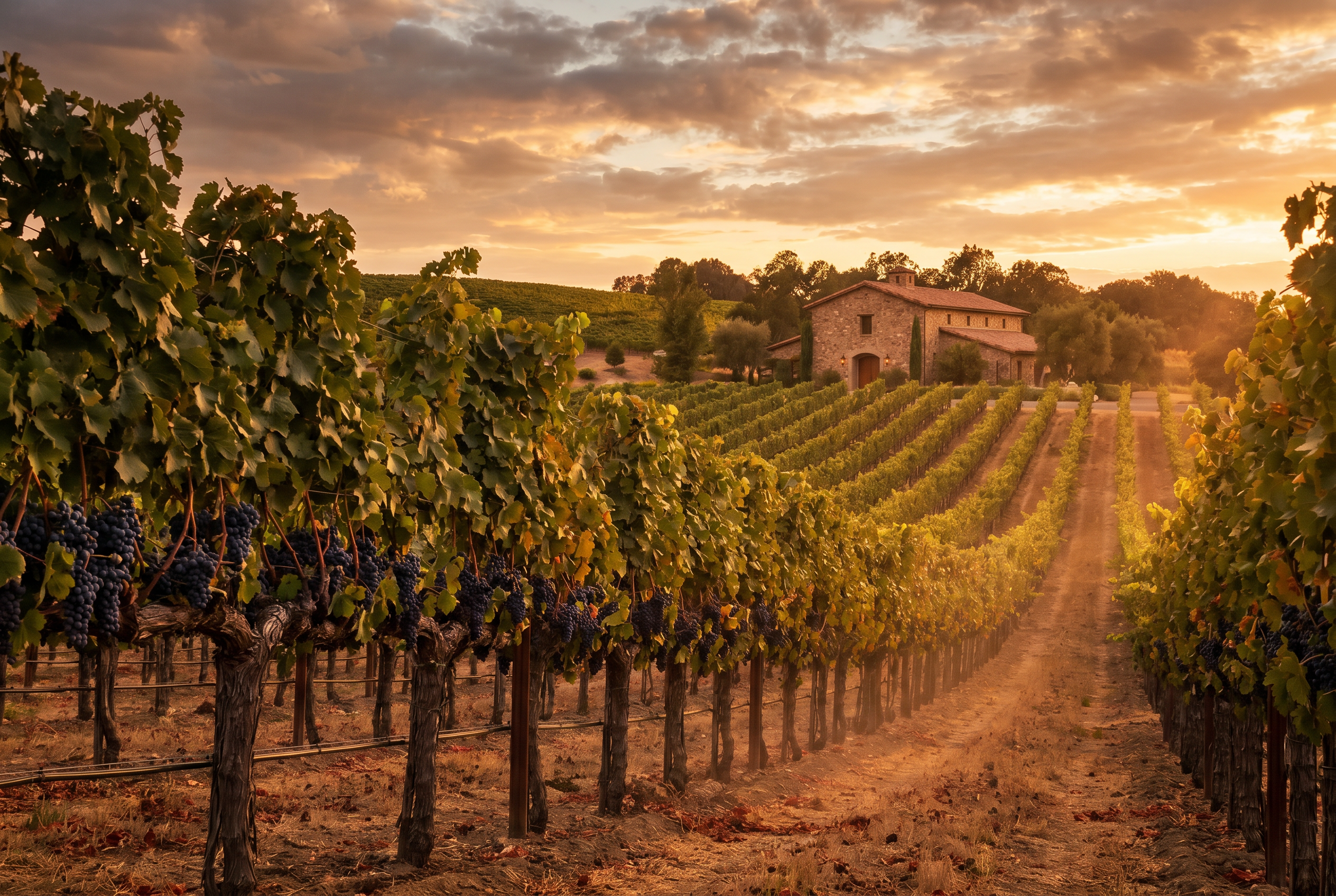
Napa Valley
California's crown jewel of Cabernet
Established as California's first American Viticultural Area in 1981, Napa Valley is home to more than 500 wineries spread across 16 distinct sub-appellations. The valley's 46,000 acres under vine produce some of the world's most celebrated Cabernet Sauvignon, benefiting from warm days, cool nights, and a remarkable diversity of volcanic and alluvial soils.
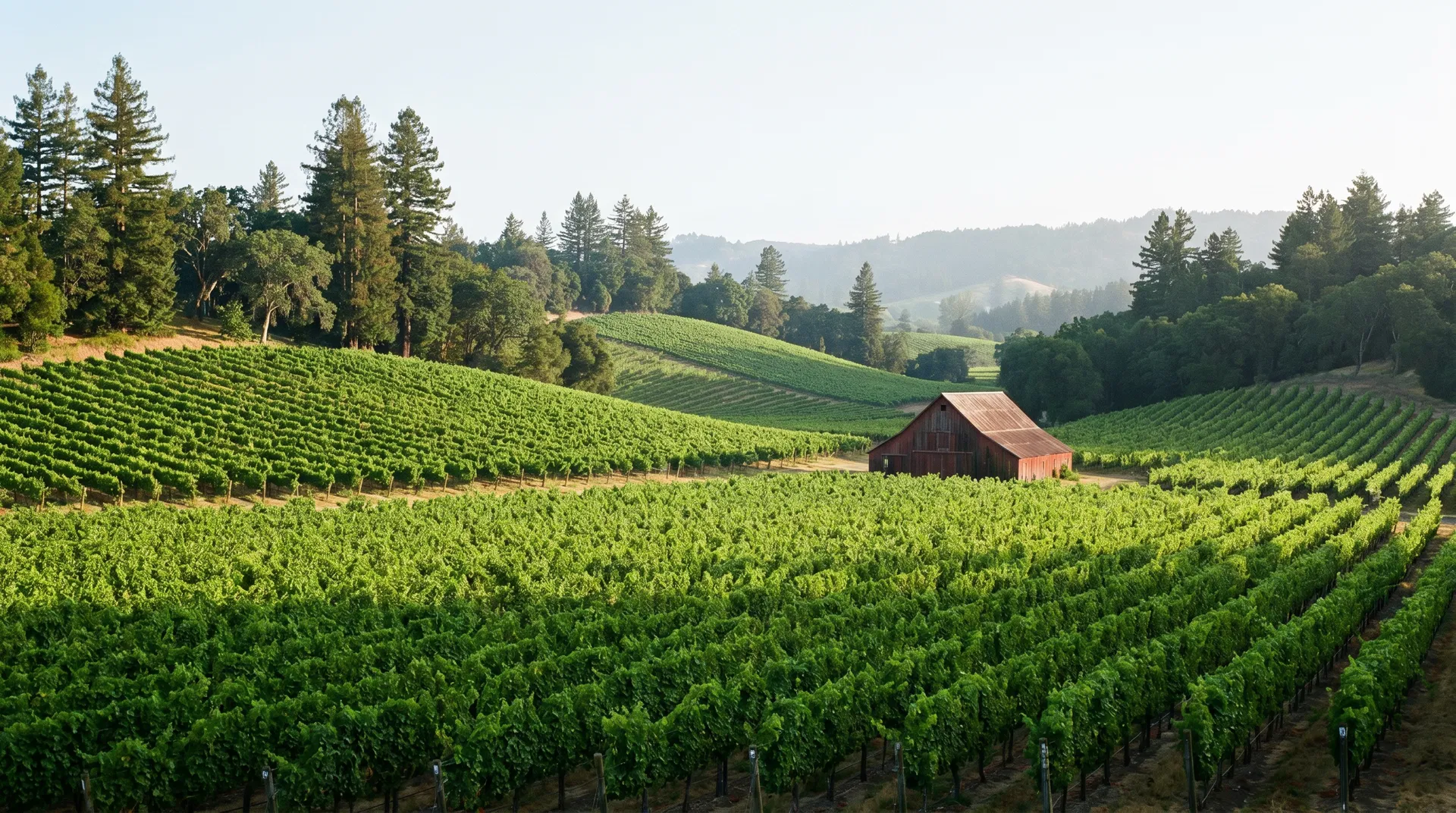
Sonoma County
Diverse, dynamic, and quietly extraordinary
Sonoma County produces nearly twice as much wine as Napa Valley across 19 distinct AVAs, from the fog-kissed Sonoma Coast to the warm Alexander Valley. The county's extraordinary diversity of soils, elevations, and microclimates makes it one of California's most versatile wine regions, with Pinot Noir and Chardonnay achieving particular renown.
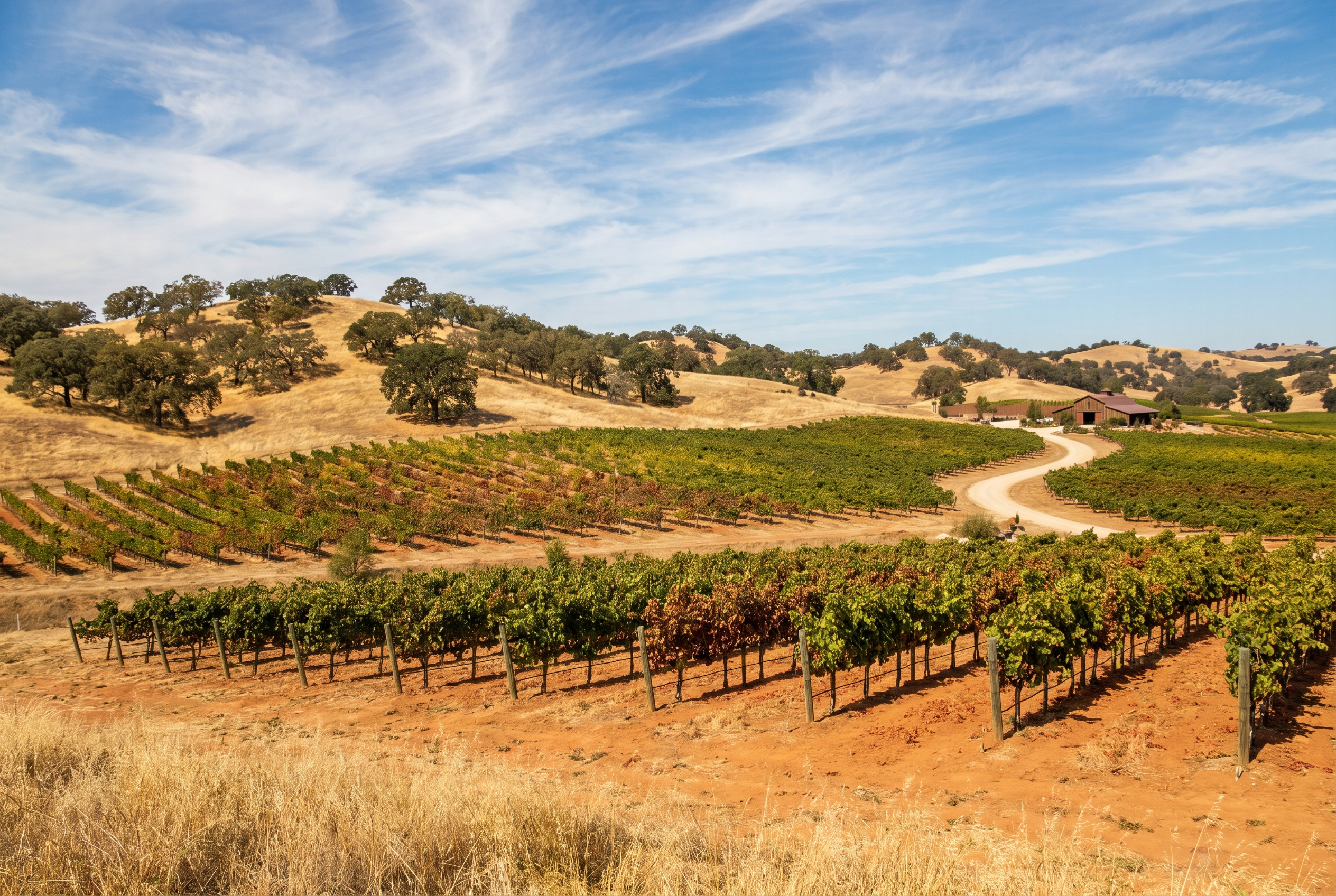
Paso Robles
Bold reds and Rhône varieties on the Central Coast
Paso Robles — meaning 'Pass of the Oak Trees' — has emerged as one of California's most exciting wine regions, with over 200 wineries growing more than 60 grape varieties across 11 sub-districts. The region's dramatic temperature swings, calcareous soils, and warm Mediterranean climate produce powerful, expressive wines, particularly from Cabernet Sauvignon, Zinfandel, and Rhône varieties.

Santa Barbara County
Where the mountains meet the sea
Santa Barbara County's unique geography — transverse mountain ranges that funnel cool Pacific air inland through east-west valleys — creates ideal conditions for Burgundian varieties. The region produces some of California's finest Pinot Noir and Chardonnay, along with expressive Syrah and a growing portfolio of Rhône and Italian varieties.

Sierra Foothills
Gold Rush country with old-vine soul
The Sierra Foothills wine region stretches across the western slopes of the Sierra Nevada, encompassing Amador, El Dorado, Calaveras, and Tuolumne counties. At elevations between 1,000 and 3,500 feet, the region is home to some of California's oldest Zinfandel vines — some over 100 years old — producing intensely flavored, characterful wines with a distinctly rustic charm.

Monterey County
Cool-climate elegance on the Central Coast
Monterey County is one of California's largest wine-producing counties, with more than 45,000 acres under vine across the Salinas Valley and its surrounding highlands. The region's extreme diurnal temperature swings — driven by cold Pacific air funneled through the Salinas Valley — produce wines of remarkable freshness, acidity, and aromatic intensity, particularly from Chardonnay, Pinot Noir, and Riesling.

Lodi
Old-vine Zinfandel capital of the world
Lodi is California's most celebrated Zinfandel appellation, home to more than 100 wineries and thousands of acres of old-vine Zinfandel — some planted over a century ago. Situated in the Sacramento-San Joaquin Delta, the region benefits from afternoon breezes that moderate its warm climate, producing wines of exceptional depth and character at accessible price points.

Mendocino County
California's organic wine frontier
Mendocino County is California's northernmost significant wine region and its most committed to organic and biodynamic farming — more than a quarter of its vineyards are certified organic, the highest proportion of any California wine county. The region's rugged terrain, diverse soils, and cool coastal influence produce wines of striking individuality, particularly from Pinot Noir, Zinfandel, and Chardonnay.
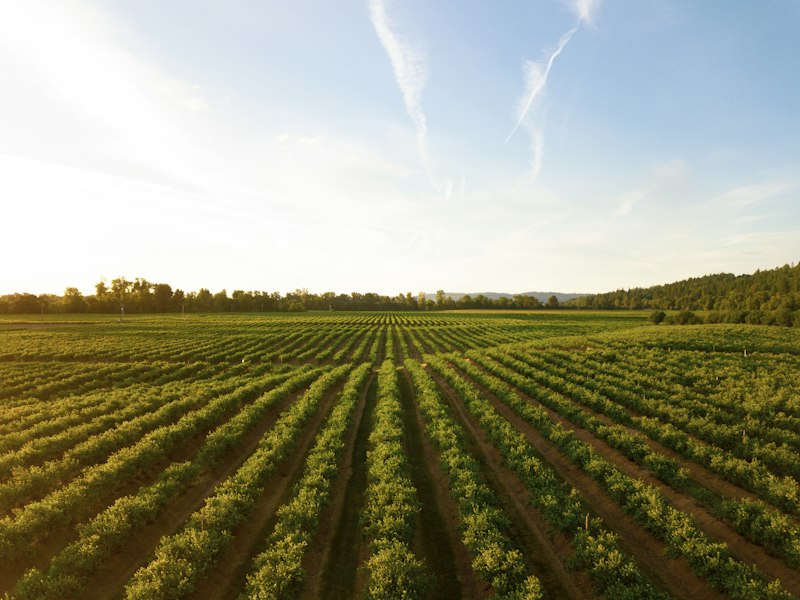
Temecula Valley
Southern California's wine country gem
Temecula Valley is Southern California's premier wine destination, drawing 3.4 million visitors annually and generating over $1.1 billion in economic impact. Located in Riverside County, the valley's Mediterranean climate, warm days, and cool nights create ideal conditions for Cabernet Sauvignon, Syrah, Viognier, and a growing range of Mediterranean varieties.

Russian River Valley
The world standard for cool-climate Pinot Noir
The Russian River Valley AVA is California's most celebrated cool-climate appellation, producing Pinot Noir and Chardonnay of extraordinary elegance and precision. Located in western Sonoma County, the valley is defined by morning fog that rolls in from the Pacific, cooling the vines and extending the growing season to produce wines of remarkable complexity and finesse.

Dry Creek Valley
Zinfandel's ancestral home in Sonoma County
Dry Creek Valley is one of California's most distinctive wine appellations — a narrow, sun-drenched valley in northern Sonoma County that has been producing world-class Zinfandel for over a century. The valley's well-drained benchland soils, warm days, and cool nights create ideal conditions for Zinfandel, Cabernet Sauvignon, and a growing range of Italian and Rhône varieties.
Los Carneros
Where Napa and Sonoma meet the bay
Los Carneros is California's most southerly major wine appellation, straddling the border between Napa and Sonoma counties at the northern tip of San Pablo Bay. The region's cool, wind-swept climate — shaped by persistent bay breezes and morning fog — makes it one of California's premier sources for Pinot Noir, Chardonnay, and sparkling wine.
Santa Cruz Mountains
California's most rugged and rewarding mountain appellation
The Santa Cruz Mountains AVA is one of California's most dramatic wine appellations — a rugged, fog-shrouded range that rises between the Pacific Ocean and Silicon Valley. The region produces some of California's most age-worthy Cabernet Sauvignon and Pinot Noir, with Ridge Vineyards' Monte Bello serving as the appellation's most celebrated benchmark.

San Luis Obispo Coast
California's newest and most exciting coastal appellation
The San Luis Obispo Coast AVA, established in 2022, is California's newest major appellation — a 40-mile stretch of coastal benchlands and hillsides between Morro Bay and Arroyo Grande that produces some of California's most distinctive cool-climate Pinot Noir and Chardonnay.
